
Launching September 2027

Stress / Acute Stress / Situational Stress

Stress At A Glance

  • Stress is the body’s physical, emotional, and mental response to a challenge, demand, or change.
  • Situational stress develops in response to a specific circumstance, while acute stress is short-term stress that begins suddenly and usually improves when the situation resolves.
  • Symptoms may include worry, irritability, sadness, racing thoughts, trouble concentrating, headaches, muscle tension, rapid heartbeat, stomach symptoms, fatigue, and poor sleep.
  • Common causes include work or school pressure, relationships, finances, caregiving, illness, grief, moving, legal problems, major life changes, and traumatic events.
  • Stress is evaluated through symptoms, current stressors, sleep, medical and mental health history, substance use, daily functioning, and coping strategies.
  • Management may include relaxation techniques, exercise, better sleep habits, social support, counseling, reducing alcohol or nicotine use, and treatment of anxiety, depression, or other contributing conditions when present.

Table of Contents

Table of Contents

What Is Stress?

Stress is the body’s physical, emotional, and mental response to a challenge, demand, or change. Stress is a normal part of life and may help people stay alert, solve problems, or respond to emergencies. However, when stress becomes intense, lasts too long, or overwhelms a person’s ability to cope, it can affect physical health, emotional well-being, relationships, work, and daily life. (medlineplus.gov)

Situational stress refers to stress that develops because of a specific event or circumstance, such as starting a new job, financial problems, relationship difficulties, illness, or moving.

Acute stress is short-term stress that develops suddenly after an event or challenge. It usually improves once the stressful situation resolves.

These conditions are different from Acute Stress Disorder (ASD), which is a mental health condition that may develop after experiencing or witnessing a traumatic event. Acute Stress Disorder involves trauma-related symptoms lasting from 3 days to 1 month and requires professional evaluation. (nimh.nih.gov)

How Common Is Stress?

Stress is extremely common. Nearly everyone experiences periods of stress during their lifetime.

The risk of excessive stress may be higher in people who:

  • Work in high-pressure jobs
  • Care for children or family members
  • Have financial difficulties
  • Experience relationship problems
  • Live with chronic illness or pain
  • Experience grief or loss
  • Have anxiety or depression
  • Have limited social support
  • Experience discrimination or bullying
  • Have experienced trauma
  • Work long hours or rotating shifts
  • Sleep poorly

Although stress is common, persistent or overwhelming stress should not be ignored because it may contribute to both physical and mental health conditions.

What Symptoms Might You Notice?

Stress affects both the mind and body.

Emotional symptoms may include:

  • Feeling overwhelmed
  • Irritability
  • Anger
  • Anxiety
  • Worry
  • Sadness
  • Feeling emotionally drained
  • Mood swings
  • Difficulty relaxing
  • Feeling helpless

Mental symptoms may include:

  • Racing thoughts
  • Difficulty concentrating
  • Forgetfulness
  • Poor decision-making
  • Constant worrying
  • Feeling mentally exhausted
  • Reduced productivity

Physical symptoms may include:

  • Headaches
  • Neck or shoulder pain
  • Muscle tension
  • Jaw clenching
  • Back pain
  • Fatigue
  • Rapid heartbeat
  • Sweating
  • Shaking
  • Upset stomach
  • Nausea
  • Diarrhea or constipation
  • Appetite changes
  • Difficulty sleeping
  • Frequent illnesses

Behavioral symptoms may include:

  • Withdrawing from family or friends
  • Crying more often
  • Arguing more frequently
  • Increased alcohol or drug use
  • Increased caffeine use
  • Smoking more
  • Emotional eating
  • Loss of motivation
  • Avoiding responsibilities
  • Procrastination

Short-term stress usually improves as the stressful event resolves, while ongoing stress may continue to affect daily functioning.

How Is Stress Diagnosed?

There is no single medical test that diagnoses stress.

A healthcare provider evaluates:

  • Current stressors
  • Emotional symptoms
  • Physical symptoms
  • Sleep patterns
  • Medical history
  • Mental health history
  • Substance use
  • Daily functioning
  • Work and family responsibilities
  • Coping strategies
  • Support systems

The provider also evaluates whether symptoms may represent:

  • Anxiety disorders
  • Depression
  • Acute Stress Disorder
  • Post-Traumatic Stress Disorder (PTSD)
  • Adjustment disorder
  • Sleep disorders
  • Medical conditions

Stress itself is not considered a disease, but prolonged stress may contribute to many health conditions.
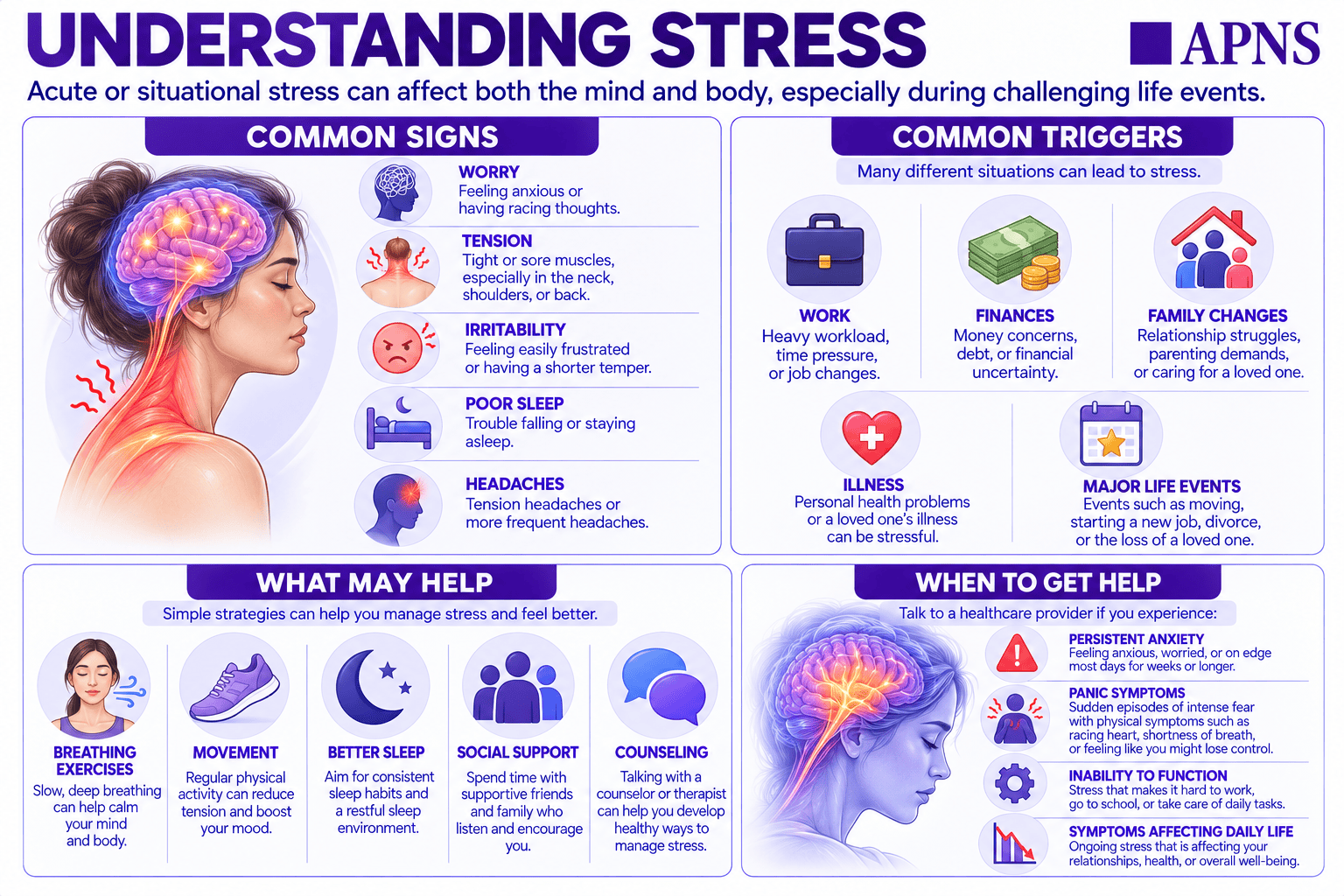
Stress / Acute Stress / Situational Stress infographic – click to enlarge

What Causes Stress?

Stress can result from almost any significant life change or challenge.

Common causes include:

  • Work or school pressures
  • Relationship problems
  • Divorce or separation
  • Financial concerns
  • Job loss
  • Moving
  • Parenting
  • Caregiving responsibilities
  • Serious illness
  • Chronic pain
  • Surgery
  • Pregnancy
  • Death of a loved one
  • Natural disasters
  • Violence or accidents
  • Military deployment
  • Legal problems
  • Major life transitions
  • Positive life events such as marriage or a promotion

Different people respond differently to the same situation. What feels manageable for one person may feel overwhelming for another.

What Can Make Stress Worse?

Stress may become more severe when combined with:

  • Poor sleep
  • Excessive caffeine
  • Nicotine
  • Alcohol
  • Recreational drugs
  • Lack of exercise
  • Poor nutrition
  • Chronic pain
  • Social isolation
  • Financial insecurity
  • Untreated anxiety or depression
  • Trying to manage everything alone
  • Working without breaks
  • Constant exposure to distressing news or social media
  • Avoiding problems instead of addressing them

Alcohol may temporarily seem calming but often worsens sleep, mood, and stress over time.

Prevention

Helpful strategies include:

  • Maintain healthy sleep habits.
  • Exercise regularly.
  • Eat balanced meals.
  • Stay hydrated.
  • Reduce caffeine.
  • Avoid nicotine.
  • Limit alcohol.
  • Build supportive relationships.
  • Learn healthy coping skills.
  • Set realistic expectations.
  • Practice mindfulness.
  • Schedule regular breaks.
  • Take vacations when possible.
  • Seek counseling early.
  • Treat anxiety or depression promptly.
  • Address work-life balance.
  • Develop a plan for managing major life changes.

Building healthy coping habits before stressful events occur can improve resilience and reduce the effects of future stress.

Learn More About Stress

The following video content is provided to help you better understand this condition. These resources are intended for educational purposes and should not replace personalized medical advice from your healthcare provider.

Labs

Laboratory testing is not used to diagnose stress directly.

Testing may be ordered to identify medical conditions causing similar symptoms.

Possible tests include:

  • Complete Blood Count: Evaluates anemia or infection.
  • Comprehensive Metabolic Panel: Assesses electrolytes, kidney function, liver function, and glucose.
  • Thyroid-Stimulating Hormone: Screens for thyroid disease.
  • Vitamin B12 and Folate: Evaluates selected nutritional deficiencies.
  • Iron Studies: Evaluates anemia or iron deficiency.
  • Vitamin D: May be considered in selected patients.
  • Blood Glucose: Screens for diabetes or hypoglycemia.
  • Pregnancy Test: When appropriate.
  • Toxicology Testing: When substance use is suspected.

Testing depends on the individual’s symptoms and medical history.

Diagnostics

Most people with stress do not require imaging or specialized testing.

Additional evaluation may include:

  • Mental Health Screening: Screens for anxiety, depression, PTSD, or adjustment disorder.
  • Sleep Evaluation: When insomnia or excessive sleepiness is present.
  • Electrocardiogram (ECG): For chest pain, palpitations, or concerning heart symptoms.
  • Sleep Study: When sleep apnea is suspected.
  • Psychological Assessment: When symptoms significantly interfere with daily life.

Testing focuses on excluding other medical conditions that may produce similar symptoms.

Treatment & Management

Treatment Options

Treatment depends on the severity of symptoms and the cause of stress.

Treatment may include:

  • Stress-management education
  • Cognitive Behavioral Therapy (CBT)
  • Problem-solving therapy
  • Mindfulness-based therapy
  • Relaxation training
  • Supportive counseling
  • Family or couples counseling
  • Treatment of anxiety or depression
  • Medication for underlying anxiety or depression when appropriate
  • Exercise programs
  • Sleep improvement strategies
  • Treatment of medical conditions contributing to stress
  • Employee Assistance Programs (EAPs)
  • Community support resources

Professional treatment is recommended when stress significantly affects work, relationships, sleep, or physical health.

Lifestyle Changes

Healthy habits that reduce stress include:

  • Maintain a regular sleep schedule.
  • Exercise regularly.
  • Eat balanced meals.
  • Stay hydrated.
  • Reduce caffeine.
  • Avoid nicotine.
  • Limit or avoid alcohol.
  • Practice deep breathing.
  • Practice mindfulness or meditation.
  • Spend time outdoors.
  • Take regular work breaks.
  • Maintain supportive relationships.
  • Set realistic expectations.
  • Break large tasks into smaller steps.
  • Schedule enjoyable activities.
  • Limit exposure to upsetting news.
  • Ask for help when needed.

Small daily changes often reduce stress more effectively than waiting for major life changes.

Medications

Stress itself is usually not treated with medication.

However, medication may be appropriate when stress contributes to another condition such as:

  • Anxiety disorders
  • Depression
  • Panic disorder
  • Insomnia

Possible medications include:

  • Selective Serotonin Reuptake Inhibitors (SSRIs): When anxiety or depression is present.
  • Serotonin-Norepinephrine Reuptake Inhibitors (SNRIs): May treat anxiety or depression.
  • Buspirone: For selected anxiety disorders.
  • Hydroxyzine: Short-term anxiety relief.
  • Sleep Medications: Selected short-term treatment when insomnia is severe.

Benzodiazepines are generally not recommended for long-term stress management because they may cause dependence, tolerance, impaired driving, falls, and withdrawal.

Medication decisions should be individualized and made with a qualified healthcare professional.

Procedures

Stress is generally treated without medical procedures.

Structured interventions may include:

  • Individual Psychotherapy
  • Group Therapy
  • Stress-Management Classes
  • Mindfulness-Based Stress Reduction (MBSR)
  • Biofeedback
  • Behavioral Health Programs
  • Intensive Outpatient Programs for severe mental health symptoms
  • Inpatient Psychiatric Care when immediate safety is a concern

Treatment focuses on developing healthier coping skills rather than eliminating every source of stress.

What Should You Expect Long-Term?

Most episodes of situational or acute stress improve as the stressful event resolves.

Recovery depends on:

  • Severity of the stressor
  • Duration of stress
  • Available social support
  • Sleep quality
  • Physical health
  • Mental health
  • Coping skills
  • Access to treatment

Without treatment, chronic stress may contribute to:

  • Anxiety disorders
  • Depression
  • High blood pressure
  • Heart disease
  • Headaches
  • Chronic pain
  • Digestive disorders
  • Sleep disorders
  • Burnout

Early intervention often improves recovery.

What Can You Do At Home?

Helpful coping strategies include:

  • Take slow, controlled breaths.
  • Focus on one task at a time.
  • Take short breaks throughout the day.
  • Exercise regularly.
  • Maintain healthy meals.
  • Stay hydrated.
  • Prioritize sleep.
  • Spend time outdoors.
  • Talk with trusted family or friends.
  • Practice relaxation exercises.
  • Write in a journal.
  • Reduce unnecessary commitments.
  • Limit social media when it increases stress.
  • Ask for help before becoming overwhelmed.

If stress feels unmanageable, seek professional support early.

Frequently Asked Questions

Is stress normal?

Yes. Stress is a normal response to challenges. It becomes a concern when it is severe, prolonged, or interferes with daily life.

What is the difference between stress and anxiety?

Stress usually develops in response to an identifiable situation. Anxiety may continue even when there is no immediate stressor and may persist long after the stressful event has passed.

Can stress cause physical symptoms?

Yes. Stress commonly causes headaches, muscle tension, stomach problems, rapid heartbeat, fatigue, and sleep problems.

Can stress raise blood pressure?

Yes. Acute stress temporarily increases blood pressure and heart rate. Chronic stress may contribute to long-term cardiovascular disease.

Can stress cause chest pain?

Yes, but chest pain should never automatically be assumed to be stress. New, severe, or persistent chest pain requires medical evaluation.

Can stress weaken the immune system?

Long-term stress may reduce immune function and increase susceptibility to illness.

Should I take time off work?

Some people benefit from temporary time away from work, especially when stress is severe. Discuss this with your healthcare provider.

When should I seek professional help?

Seek help when stress persists for weeks, interferes with work or relationships, causes panic attacks, severe sleep problems, depression, or thoughts of self-harm.

Questions To Ask Your Provider

Consider asking:

  • Is my stress affecting my health?
  • Could I have anxiety or depression?
  • Would counseling help?
  • Should I see a therapist?
  • Would CBT be appropriate?
  • Are medications necessary?
  • Could my physical symptoms have another cause?
  • How can I improve my sleep?
  • Should I reduce caffeine?
  • What relaxation techniques are most effective?
  • When should I seek emergency care?
  • Should I take time away from work?
  • What community resources are available?

Specialist Referrals

You may be referred to:

  • Primary Care Provider
  • Psychologist
  • Psychiatrist
  • Psychiatric Mental Health Nurse Practitioner
  • Licensed Counselor or Therapist
  • Social Worker
  • Employee Assistance Program (EAP)
  • Sleep Medicine Specialist
  • Substance-Use Specialist
  • Cardiologist if concerning heart symptoms occur

Is Stress Curable?

Most episodes of situational or acute stress improve significantly once the stressor resolves or effective coping strategies are developed.

Treatment may help:

  • Improve mood
  • Reduce physical symptoms
  • Improve sleep
  • Increase concentration
  • Improve work performance
  • Strengthen relationships
  • Reduce anxiety
  • Improve overall quality of life

Persistent stress should not be accepted as “normal” when it is affecting daily functioning.

Emergency Symptoms / When To Seek Immediate Help

Call 911 or seek emergency medical care immediately for:

  • Severe chest pain
  • Difficulty breathing
  • Loss of consciousness
  • Stroke symptoms
  • Seizure
  • Severe confusion
  • Immediate danger of harming yourself or another person
  • Suspected overdose
  • Severe allergic reaction

Seek urgent mental health evaluation for:

  • Thoughts of suicide or self-harm
  • Feeling unable to stay safe
  • Hallucinations
  • Extreme agitation
  • Several days with almost no sleep
  • Panic attacks preventing normal functioning
  • Rapidly worsening anxiety or depression
  • Inability to care for yourself
  • Increasing alcohol or drug use to cope

In the United States, call or text 988 for suicidal thoughts, emotional distress, or another mental health crisis.

CALL 911

APNS does not provide emergency medical services. If you believe you are experiencing a medical emergency, including (but not limited to) chest pain, difficulty breathing, stroke symptoms, severe allergic reactions, anaphylaxis, uncontrolled bleeding, seizures, loss of consciousness, or any other potentially life-threatening condition, you are instructed to call 911 immediately or go immediately to the nearest emergency department.

Official Resources / External Links

National Institute of Mental Health – Coping With Traumatic Events
https://www.nimh.nih.gov/health/topics/coping-with-traumatic-events

Provides information about normal stress reactions, traumatic stress, coping strategies, and when to seek professional help.

NIH MedlinePlus – Stress and Your Health
https://medlineplus.gov/ency/article/002215.htm

Patient-friendly information about stress, symptoms, causes, and healthy coping strategies.

Centers for Disease Control and Prevention – Coping With Stress
https://www.cdc.gov/mentalhealth/stress-coping/index.html

Provides practical stress-management strategies and mental health resources.

Substance Abuse and Mental Health Services Administration (SAMHSA)
https://www.samhsa.gov/find-help

Provides information about finding mental health treatment and support services.

988 Suicide & Crisis Lifeline
https://988lifeline.org

Provides free, confidential crisis support 24 hours a day by calling or texting 988.

This guide is intended for educational purposes only and should not replace medical or mental health advice, diagnosis, or treatment from a qualified healthcare professional. Stress-related symptoms may also be caused by anxiety disorders, depression, acute stress disorder, post-traumatic stress disorder, sleep disorders, thyroid disease, heart disease, medication side effects, substance use, or other medical conditions. Do not begin, stop, or change medications without guidance from your healthcare provider. Seek prompt medical attention if stress causes significant impairment, persistent symptoms, severe anxiety, depression, panic attacks, or thoughts of self-harm. Call 911 immediately for severe chest pain, difficulty breathing, stroke symptoms, seizure, overdose, or another medical emergency. In the United States, call or text 988 for suicidal thoughts or a mental health crisis.

Get personalized care for Stress

At APNS, our providers take the time to understand your condition and your goals. We offer comprehensive telehealth visits at a fixed rate — no membership fees, no insurance required, and no unexpected charges. Whether you’re newly diagnosed or looking for a provider who actually listens, we’re here to help.