

Type 2 diabetes is a long-term condition that affects how your body uses glucose (blood sugar), which is one of your body’s main sources of energy. Normally, a hormone called insulin helps move glucose from your bloodstream into your cells to be used for energy. With type 2 diabetes, your body either does not use insulin effectively (called insulin resistance) or does not make enough insulin to keep your blood sugar within a healthy range. As a result, glucose builds up in the bloodstream instead of being used by your cells.
Type 2 diabetes often develops gradually over many years and may not cause noticeable symptoms at first. If left untreated, high blood sugar can damage your heart, kidneys, eyes, nerves, and blood vessels. The good news is that many people successfully manage type 2 diabetes through healthy lifestyle changes, regular medical care, medications, and monitoring their blood sugar.
Type 2 Diabetes – NIH MedlinePlus
https://medlineplus.gov/type2diabetes.html
Provides easy-to-understand information about type 2 diabetes, including symptoms, diagnosis, treatment, and preventing complications.
Type 2 Diabetes – National Institute of Diabetes and Digestive and Kidney Diseases (NIDDK)
https://www.niddk.nih.gov/health-information/diabetes/overview/what-is-diabetes/type-2-diabetes
Explains what type 2 diabetes is, how it develops, risk factors, and treatment options.
Type 2 diabetes is one of the most common chronic diseases in the United States. More than 38 million Americans have diabetes, and about 90–95% of those cases are type 2 diabetes. Millions of adults also have prediabetes, which increases their risk of developing type 2 diabetes if healthy lifestyle changes are not made.
National Diabetes Statistics Report – Centers for Disease Control and Prevention (CDC)
https://www.cdc.gov/diabetes/data/statistics-report/index.html
Provides the latest information about how common diabetes is in the United States and who is most affected.
Some people with type 2 diabetes have no symptoms, especially in the early stages. Others may notice symptoms that develop gradually over time.
Common symptoms may include:
Your healthcare provider can diagnose type 2 diabetes using blood tests that measure your blood sugar levels. They will also review your medical history, symptoms, and risk factors.
Common diagnostic tests include the A1C test, fasting blood glucose test, oral glucose tolerance test (OGTT), and a random blood glucose test when symptoms are present.
Diabetes Tests – CDC
https://www.cdc.gov/diabetes/diabetes-testing/index.html
Explains the different tests used to diagnose diabetes and what the results mean.
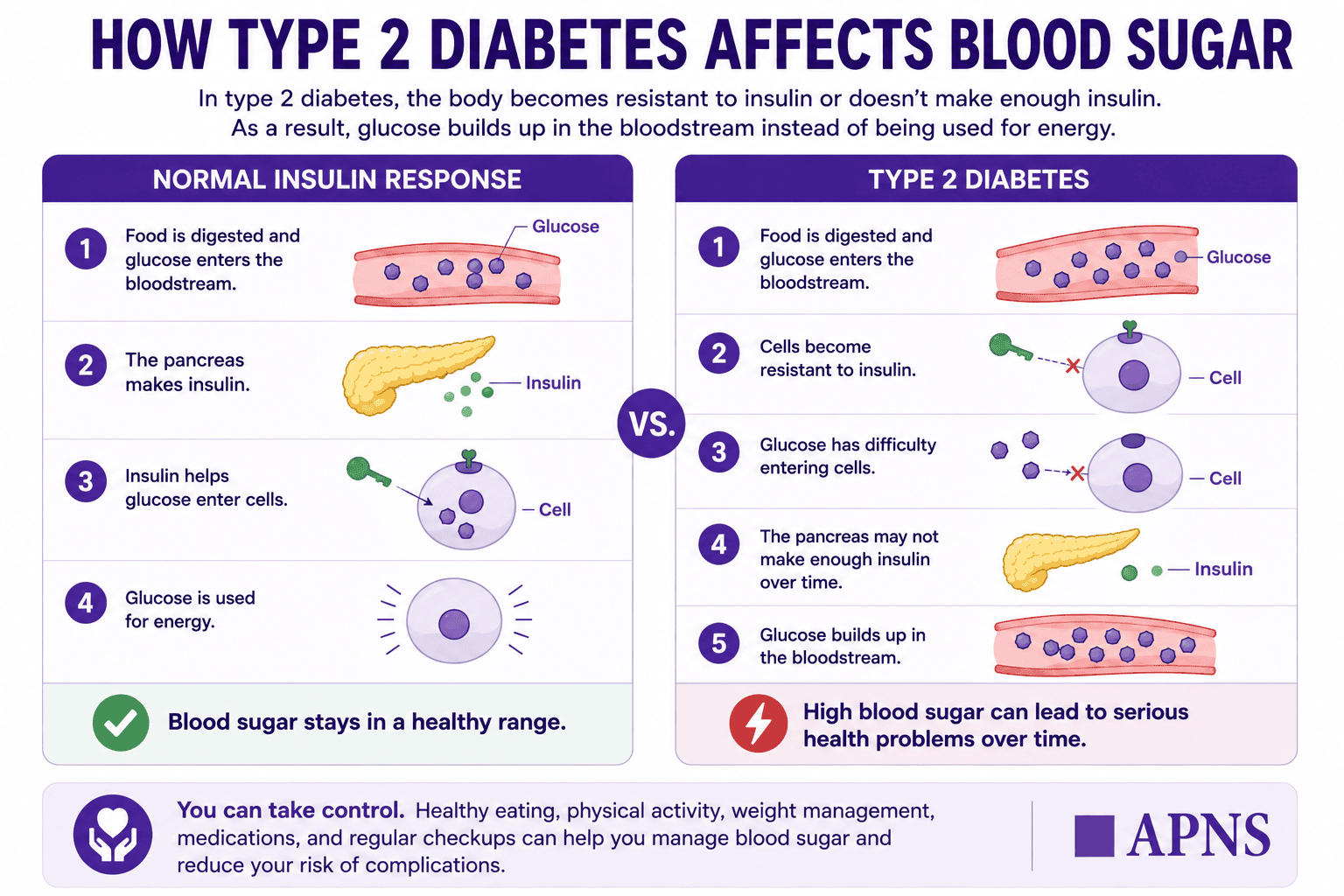
Type 2 diabetes develops when your body becomes resistant to insulin or does not produce enough insulin to keep blood sugar at a healthy level. Several factors can increase your risk, including genetics, age, lifestyle, and certain medical conditions.
Risk factors may include:
Type 2 Diabetes – NIDDK
https://www.niddk.nih.gov/health-information/diabetes/overview/what-is-diabetes/type-2-diabetes
Learn about the causes, risk factors, and how insulin resistance leads to type 2 diabetes.
Type 2 diabetes develops when your body becomes resistant to insulin or does not produce enough insulin to keep blood sugar at a healthy level. Several factors can increase your risk, including genetics, age, lifestyle, and certain medical conditions.
Risk factors may include:
Type 2 Diabetes – NIDDK
https://www.niddk.nih.gov/health-information/diabetes/overview/what-is-diabetes/type-2-diabetes
Learn about the causes, risk factors, and how insulin resistance leads to type 2 diabetes.
Although not every case can be prevented, healthy lifestyle habits can greatly reduce your risk of developing type 2 diabetes or delay its onset.
Helpful prevention strategies include:
Prevent Type 2 Diabetes – CDC
https://www.cdc.gov/diabetes/prevention/index.html
Provides practical steps to reduce your risk of developing type 2 diabetes.
The following video content is provided to help you better understand this condition. These resources are intended for educational purposes and should not replace personalized medical advice from your healthcare provider.
Several laboratory tests are commonly used to diagnose diabetes and monitor how well it is being managed.
Common laboratory tests include:
A1C Test – CDC
https://www.cdc.gov/diabetes/diabetes-testing/prediabetes-a1c-test.html
Explains what the A1C test measures and how it helps monitor diabetes.
Blood Glucose Test – NIH MedlinePlus
https://medlineplus.gov/lab-tests/glucose-test/
Provides information about blood glucose testing and what the results may indicate.
Several laboratory tests are commonly used to diagnose diabetes and monitor how well it is being managed.
Common laboratory tests include:
A1C Test – CDC
https://www.cdc.gov/diabetes/diabetes-testing/prediabetes-a1c-test.html
Explains what the A1C test measures and how it helps monitor diabetes.
Blood Glucose Test – NIH MedlinePlus
https://medlineplus.gov/lab-tests/glucose-test/
Provides information about blood glucose testing and what the results may indicate.
Treatment focuses on keeping your blood sugar within a healthy range and reducing your risk of long-term complications. Your treatment plan will depend on your overall health, blood sugar levels, and other medical conditions.
Treatment options may include:
Living With Diabetes – CDC
https://www.cdc.gov/diabetes/living-with/index.html
Provides practical information about managing diabetes through healthy lifestyle habits and medical care.
Healthy lifestyle habits are one of the most important parts of managing type 2 diabetes. Even small changes can improve blood sugar control and reduce your risk of complications.
Helpful lifestyle changes include:
Diabetes Meal Planning – CDC
https://www.cdc.gov/diabetes/healthy-eating/index.html
Provides practical nutrition tips, meal planning ideas, and healthy food choices for people living with diabetes.
Many people with type 2 diabetes take medications to help lower their blood sugar. Your healthcare provider will recommend the treatment that best fits your needs based on your health and blood sugar goals.
Common medications include:
Metformin – NIH MedlinePlus
https://medlineplus.gov/druginfo/meds/a696005.html
Explains how metformin works, how to take it safely, and possible side effects.
Type 2 Diabetes Medicines – National Institute of Diabetes and Digestive and Kidney Diseases (NIDDK)
https://www.niddk.nih.gov/health-information/diabetes/overview/managing-diabetes/medicines-treatments
Reviews the different medications used to treat type 2 diabetes and how they work.
Most people with type 2 diabetes do not need a medical procedure to treat their diabetes. However, some people may need procedures to help manage complications or improve blood sugar control if other treatments have not been successful.
Procedures that may be recommended include:
Metabolic Surgery for Type 2 Diabetes – American Diabetes Association (ADA)
https://diabetes.org/about-diabetes/diabetes-treatment/metabolic-surgery
Learn how metabolic surgery may improve blood sugar control for some people with type 2 diabetes.
Continuous Glucose Monitoring – CDC
https://www.cdc.gov/diabetes/managing/managing-blood-sugar.html
Learn how continuous glucose monitoring can help people better manage their diabetes.
Type 2 diabetes is a lifelong condition, but many people successfully manage it and live healthy, active lives. Keeping your blood sugar, blood pressure, and cholesterol within your target ranges can greatly reduce your risk of long-term complications.
Regular follow-up appointments, healthy lifestyle habits, and taking medications as prescribed are important parts of long-term diabetes management.
Taking an active role in your care can help you successfully manage type 2 diabetes and reduce your risk of complications.
Helpful tips include:
Living With Diabetes – CDC
https://www.cdc.gov/diabetes/living-with/index.html
Provides practical tips for living well with diabetes and reducing your risk of complications.
Yes. You can still enjoy sweets occasionally, but portion size and overall carbohydrate intake are important. A balanced meal plan can help you enjoy a variety of foods while keeping your blood sugar within your target range.
Not always. Some people manage type 2 diabetes with healthy lifestyle changes alone, while others need medication or insulin. Your treatment plan may change over time.
Yes. Regular physical activity helps your body use insulin more effectively and can lower blood sugar levels.
Many cases of type 2 diabetes can be delayed or prevented through healthy eating, regular physical activity, maintaining a healthy weight, and treating prediabetes.
Most people with diabetes should have regular follow-up visits throughout the year. Your provider will recommend a schedule based on your individual needs.

Consider asking your healthcare provider:
Many people with type 2 diabetes receive care from their primary care provider. Depending on your individual needs, your provider may recommend additional specialists.
You may be referred to:
Find a Diabetes Education Program – Association of Diabetes Care & Education Specialists (ADCES)
https://www.diabeteseducator.org/living-with-diabetes/find-an-education-program
Find diabetes education programs and certified diabetes care specialists near you.
Many people with type 2 diabetes receive care from their primary care provider. Depending on your individual needs, your provider may recommend additional specialists.
You may be referred to:
Find a Diabetes Education Program – Association of Diabetes Care & Education Specialists (ADCES)
https://www.diabeteseducator.org/living-with-diabetes/find-an-education-program
Find diabetes education programs and certified diabetes care specialists near you.
Call 911 or seek emergency medical care if you experience:
Seek medical attention promptly if you develop:
Diabetic Emergencies – CDC
https://www.cdc.gov/diabetes/living-with/index.html
Learn to recognize warning signs of diabetes emergencies and when immediate medical care is needed.
CALL 911
APNS does not provide emergency medical services. If you believe you are experiencing a medical emergency, including (but not limited to) chest pain, difficulty breathing, stroke symptoms, severe allergic reactions, anaphylaxis, uncontrolled bleeding, seizures, loss of consciousness, or any other potentially life-threatening condition, you are instructed to call 911 immediately or go immediately to the nearest emergency department.
Type 2 Diabetes – NIH MedlinePlus
https://medlineplus.gov/type2diabetes.html
Patient-friendly information about type 2 diabetes, symptoms, treatment, medications, and living with diabetes.
Type 2 Diabetes – National Institute of Diabetes and Digestive and Kidney Diseases (NIDDK)
https://www.niddk.nih.gov/health-information/diabetes/overview/what-is-diabetes/type-2-diabetes
Comprehensive information about causes, diagnosis, treatment, and preventing complications.
Diabetes – Centers for Disease Control and Prevention (CDC)
https://www.cdc.gov/diabetes/
Reliable information about diabetes prevention, management, nutrition, physical activity, and diabetes education.
American Diabetes Association (ADA)
https://diabetes.org/
Evidence-based patient education, diabetes news, meal planning, medications, and healthy living resources.
This guide is intended for educational purposes only and should not replace medical advice, diagnosis, or treatment from your healthcare provider. Always follow the recommendations of your healthcare team regarding your individual health needs. If you have questions about your diabetes or experience worsening symptoms, contact your healthcare provider. Call 911 or seek emergency medical care if you experience signs of a medical emergency.
At APNS, our providers take the time to understand your condition and your goals. We offer comprehensive telehealth visits at a fixed rate — no membership fees, no insurance required, and no unexpected charges. Whether you’re newly diagnosed or looking for a provider who actually listens, we’re here to help.